A road-safety initiative for every way we move

The road belongs to everyone on it.

Different speeds. Different sightlines. One shared stretch of pavement—and one shared responsibility to help each other arrive.

The road pact

A little more awareness makes a lot more room.

“No one has the road to themselves. Every trip is a quiet agreement with people we may never meet.”

  1. 01

    See the whole road.

    Look beyond the vehicle in front of you. Scan crossings, shoulders, mirrors, and the space a larger vehicle needs.

  2. 02

    Make your move known.

    Signal early. Hold a predictable line. Give the people around you enough time to understand what happens next.

  3. 03

    Leave a generous buffer.

    Space gives everyone time: time to stop, turn, recover from a mistake, or simply be seen.

  4. 04

    Slow when the scene changes.

    A bend, a crossing, dusk, weather, or glare can change the road quickly. A calmer pace buys a clearer view.

These principles reflect the U.S. DOT Safe System view that responsibility for road safety is shared.Explore the framework

Out here, perspective matters

The same road feels different depending on how you travel.

Start with the point of view you know. Then read one you don’t.

01

Passenger drivers

Make the next move legible.

Look beyond the vehicle directly ahead. Check crosswalks and intersections for smaller road users, signal early, and leave large vehicles the room they need to stop and turn.

  • Scan the whole scene
  • Signal before the move
  • Leave a generous buffer
Official guidance
02

Truck & bus operators

Protect the space you cannot see.

Commercial vehicles have large blind spots, long stopping distances, and wide turns. Repeated mirror checks and deliberate positioning help account for people who may not understand those limits.

  • Recheck the No-Zone
  • Set up wide turns early
  • Expect the unexpected
Official guidance
03

Runners & pedestrians

Be visible. Be predictable.

Use sidewalks and crossings where available, obey signs and signals, and choose well-lit places to cross. Where there is no sidewalk, follow local rules and stay as far from moving vehicles as practical.

  • Choose the visible route
  • Cross where drivers look
  • Follow local road rules
Official guidance
04

Motorcyclists

Ride to be seen—and ready.

Stay sober, keep the motorcycle road-ready, wear a DOT-compliant helmet, and use lane position and signals to make your intentions easier for other road users to read.

  • Wear compliant protection
  • Stay out of blind spots
  • Build skill before speed
Official guidance
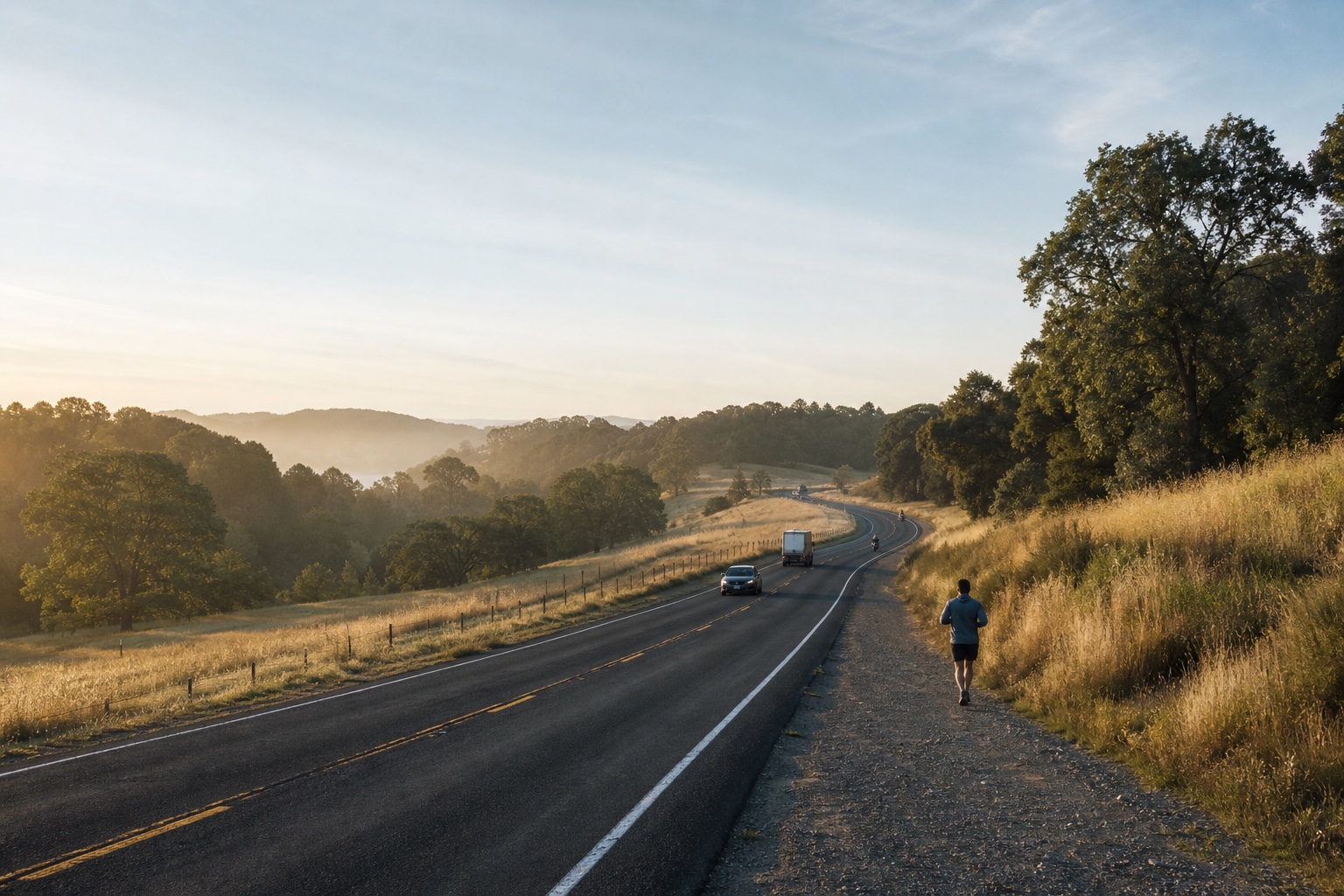
A runner on a wide gravel shoulder beside a curving country road with a car, truck, and motorcyclists in the distance

The long view

“The road has room for all of us when we leave room for each other.”

Roadside notes

Three moments worth meeting with more care.

The road changes from minute to minute. Good habits should change with it.

At crossings

Look past the obvious.

A stopped vehicle may be hiding a person in the crosswalk. Slow down, never pass a vehicle stopped at a crossing, and give people time to finish crossing.

Near large vehicles

Give size more space.

Trucks and buses need extra room to stop and turn. Avoid lingering beside them, especially near the front, rear, and right side where visibility can be limited.

In low light

Make visibility a decision.

Dawn, dusk, weather, and glare make every road user harder to read. Reduce speed for conditions, remove distractions, and use lights or reflective gear when appropriate.

Bring the message home

Safer roads begin in real communities.

SharingTheRoad.org helps community groups, driving programs, employers, insurers, carriers, and safety-minded brands turn shared concern into practical awareness and outreach.

Start a conversation
  1. 01
    Name the people meeting on the road.

    Start with the two points of view the work needs to bring closer.

  2. 02
    Find the moment that needs more care.

    Focus the message on a real visibility, timing, or space challenge.

  3. 03
    Share it where journeys begin.

    Bring useful guidance to schools, clubs, workplaces, and partner channels.

Keep learning

Go farther with official road-safety guidance.

Sharingthe Road

Everyone is someone on the road.

Look again. Leave room. Arrive together.

Back to the top